ToonHub4u: cartoons for children, from PAW Patrol, Ninjago and Sofia the First to Gabby's Dollhouse, Mickey Mouse Clubhouse, Octonauts and Bubble Guppies, and where to watch them
205 animated series for children made since 2005.
Most popular
View all
Latest toons
View all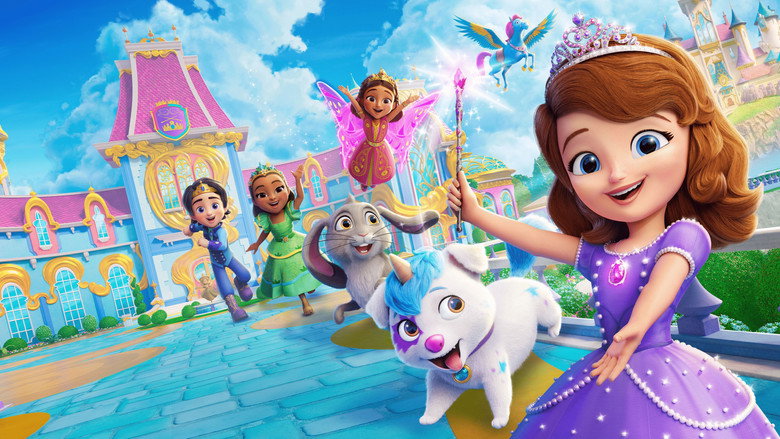


Animal friends
View all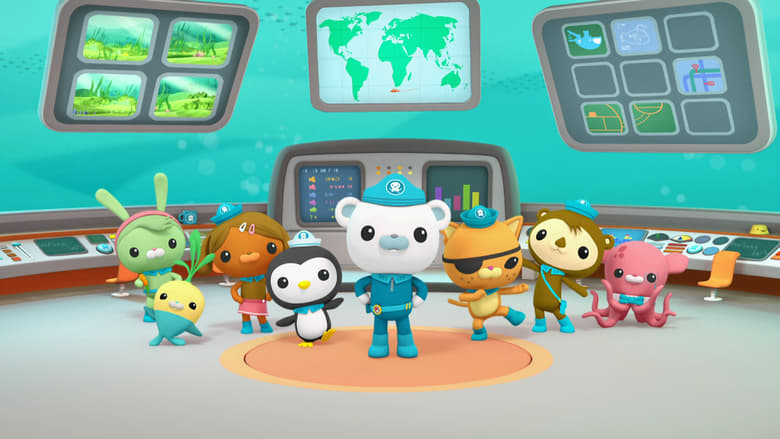
Learning
View all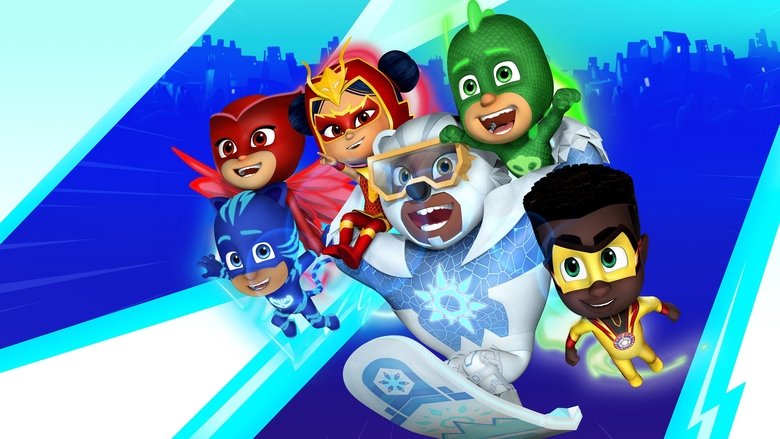
Cartoons for children: the ToonHub4u guide
ToonHub4u: cartoons for children, from PAW Patrol, Ninjago and Sofia the First to Gabby's Dollhouse, Mickey Mouse Clubhouse, Octonauts and Bubble Guppies
Today there are more cartoons for small children than at any time before, and less time than ever to choose among them. A parent with ten minutes before bedtime, a grandparent looking after two cousins of different ages, a teacher who wants a quiet quarter of an hour about numbers: each needs to know quickly what a series is, whom it suits and where it can be seen. ToonHub4u is a guide made for that purpose. It describes 205 animated series for children made since 2005, each with its own page, its story, its seasons and a Watch now button that leads to the official services carrying it in your country.
Every series was looked at by hand before it was admitted. The selection keeps to programmes made for children, most of them for the years from two to eight, and animation for adults and action series for older viewers were left out. What remains is arranged in the ways families actually choose: by what a child loves, animals, engines, princesses, numbers and letters; by the studio; and by the year.
This guide introduces the best-loved series of each kind, explains what to expect of them, and ends with plans for a first week. Each section links to a short help page, and the How to watch page sums up the simple steps from a picture card to the official service.
How ToonHub4u looks
ToonHub4u keeps the look of the site whose name it carries, which was laid out like a magazine. A dark bar at the very top carries a line of the newest series. The name stands in the centre in large letters, with a dark menu bar beneath it marked in bright blue. The series are shown as wide picture cards, two abreast, each with a still from the programme, a small blue label, the title, the year, the number of seasons, the average rating and a blue button.
The first group on the home page, Most popular, shows the eight series with the most votes from viewers. Latest toons, Animal friends and Learning follow. The column at the side holds the six top-rated series with small posters, a list of every category with the number of series in each, and the help pages. On a telephone the cards stand in a single column and the menu folds into a button.
Choosing for a child
A few principles make choosing easier. The first is pace. Programmes for two- and three-year-olds work best when they are slow: few cuts, a calm narrator, one small problem and a clear ending. Sarah & Duck, Puffin Rock, Tumble Leaf, Stillwater and Daniel Tiger's Neighborhood are of this kind, and the For the very young help page lists more. Faster, louder shows such as PAW Patrol or Blaze and the Monster Machines suit four- to six-year-olds, who can follow a rescue with several steps.
The second is length. Most series here are made in stories of eleven minutes, shown in pairs to fill a half hour, and some, like Hey Duggee, run for only seven. A single story is a sensible unit for a small child. The third is watching together when you can. Research on children's television has found again and again that a programme teaches far more when an adult sits alongside and talks about it afterwards, and the best series, with their songs, questions and jokes for grown-ups, are made with that in mind.
The rating beside each title is the average given by viewers around the world, most of them parents, and it is a useful first sign. The number of seasons is another: a series that has run for four seasons or more has kept the affection of a great many children, and the Long runners category gathers 60 of them, described on the Long runners help page.
PAW Patrol and the rescuers
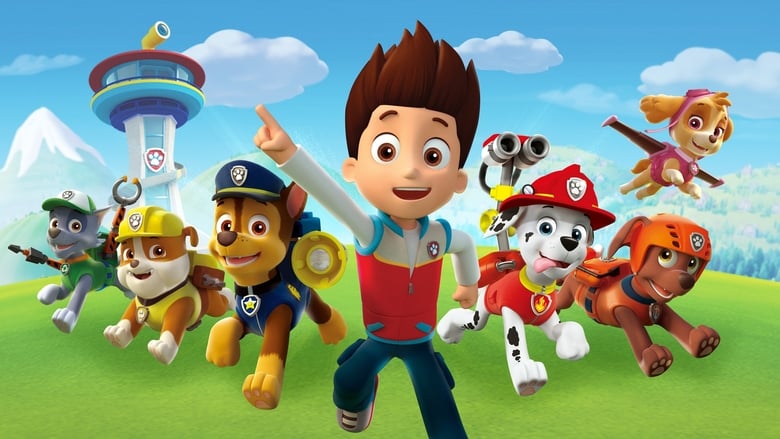
PAW Patrol, which began in 2013, stands first in the Most popular group, and for many children under six it is simply the favourite programme in the world. Ryder, a boy of ten, leads a team of rescue pups from a lookout tower above the seaside town of Adventure Bay. Each pup has a job and a vehicle to match: Chase is a police dog, Marshall a clumsy and good-hearted fire pup, Skye flies a helicopter, Rubble drives a digger, Rocky recycles and Zuma works on the water. When someone calls for help, a lost kitten, a stranded train, the mayor's pet chicken, Ryder chooses the right pups for the task.
The pattern is the same every time, and that is the secret of it. Small children love to know what is coming: the call, the slide down to the vehicles, the plan, the rescue and the treat at the end. The series teaches that every problem has a solution if each one does the part they are good at. It has run for fourteen seasons. Rubble & Crew, from 2023, follows the bulldog Rubble and his family of builders in a neighbouring town.
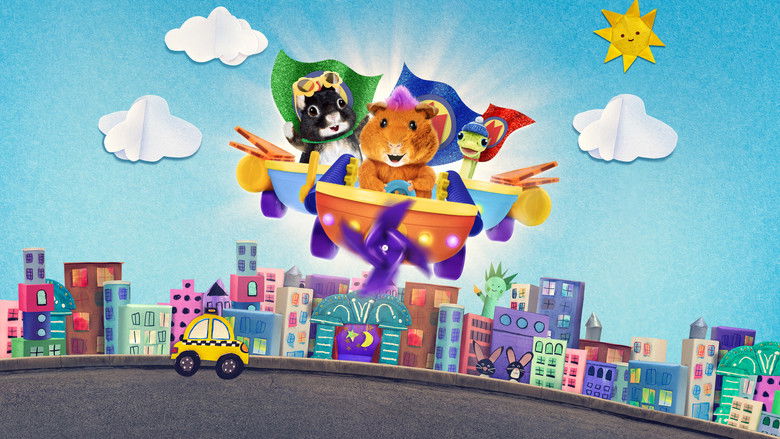
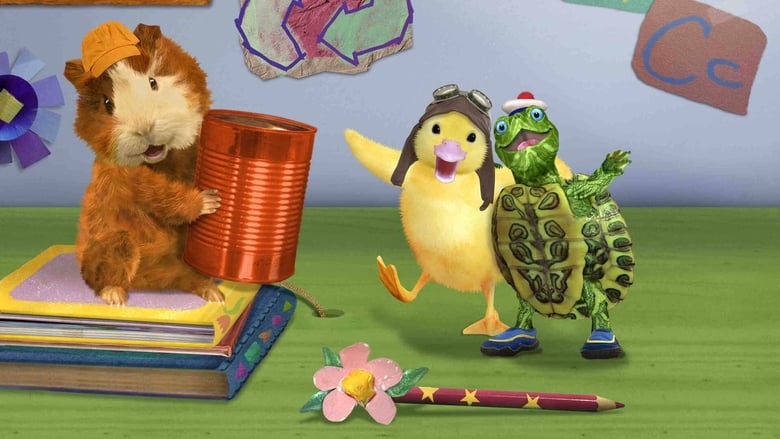
Rescue teams are a whole family of programmes. Wonder Pets!, from 2006, is the most unusual: three classroom pets, a guinea pig, a turtle and a duckling, answer the telephone when the children have gone home and fly off to save a baby animal somewhere in the world, singing all the way, for the series is a small opera with a live orchestra. Wonder Pets: In the City brought a new team in 2024. Go, Diego, Go! sends an eight-year-old animal rescuer into the rainforest. T.O.T.S. has a penguin and a flamingo delivering baby animals to their families, SuperKitties has four kittens who keep their city safe, and Top Wing, Pupstruction and Firebuds continue the line.
Animal friends
The Animal friends category is one of the largest, with 86 series, and the Animal friends help page divides it into rescuers and gentle friends. Octonauts, which began in Britain in 2010, belongs to both groups. Captain Barnacles, a polar bear, Kwazii, a cat with a pirate's past, and Peso, a penguin medic, live in an undersea base called the Octopod with five other crew members, and each story has them explore, rescue and protect a real sea creature. Children finish an episode knowing what a vampire squid or a blobfish is, and the closing song reports the facts. Octonauts: Above & Beyond, from 2021, takes the crew on to land.
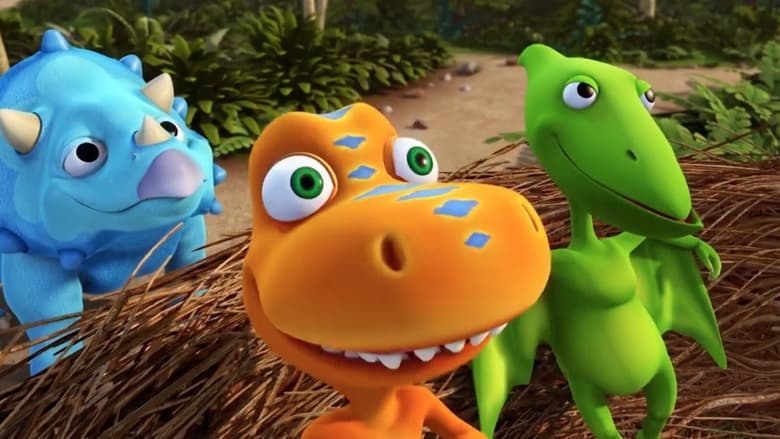
Dinosaur Train, from the Jim Henson Company, follows Buddy, a young Tyrannosaurus adopted by a family of Pteranodons, who rides a train through the ages of the dinosaurs and meets a new species at each stop, with a real palaeontologist to explain afterwards. Gigantosaurus is a brighter, sillier dinosaur adventure. Nature Cat is about a house cat who dreams of exploring the outdoors, and The Creature Cases makes two animal detectives solve puzzles of natural history.
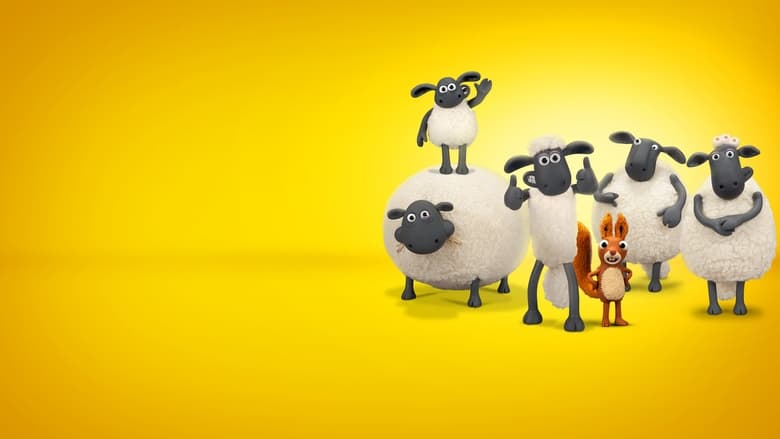
The gentle friends are for quiet times. Puffin Rock, made in Ireland, follows a young puffin, Oona, and her baby brother on a wild island, with soft colours and a warm narrator. Frog and Toad, from the beloved books by Arnold Lobel, is about two friends of opposite temper and the small events of their days. Peter Rabbit, Franklin and Friends, Llama Llama, Pete the Cat, My Friend Rabbit, Tip the Mouse, Lucas the Spider, Timmy Time, the nursery adventures of a lamb from the makers of Shaun the Sheep, and Shaun the Sheep: Adventures from Mossy Bottom itself, which has one of the highest ratings in the catalogue, all belong here.
Ponies and pets have their own admirers: My Little Pony: Pony Life, My Little Pony: Tell Your Tale, Horseland, It's Pony, Pound Puppies, Littlest Pet Shop: A World of Our Own and Pretzel and the Puppies, about a very long dachshund, his wife and their five pups, who try to make their town a better place.
Trucks and trains
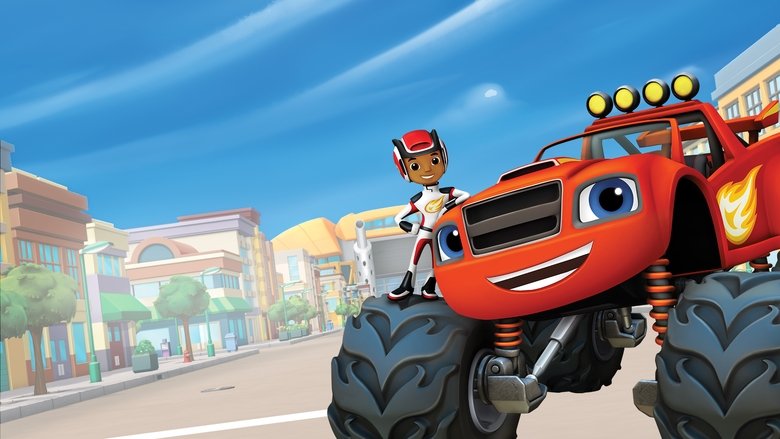
The Trucks and trains category holds 24 series, and the Trucks and trains help page lists them by road, rail and air. Blaze and the Monster Machines, from 2014, is the leader. Blaze is a red monster truck, and AJ, a boy of eight, is his driver. In each race or rescue they meet a problem of science, engineering or arithmetic, explain it plainly, force, friction, trajectory, and ask the children watching to help solve it. It is a fast, noisy series with real ideas inside it, and it has run for nine seasons.
Trash Truck, from 2020, is its opposite, and one of the loveliest programmes in the catalogue: a six-year-old boy, Hank, whose best friend is the enormous, gentle refuse lorry that visits his street, and their slow adventures with a bear, a raccoon and a mouse. Go! Go! Cory Carson is about a small car and his family in a town of vehicles. The Stinky & Dirty Show pairs a bin lorry with a digger who solve problems by asking "what if?". Ricky Zoom is a young rescue motorbike, Roary the Racing Car lives at a racetrack, and Mighty Monsterwheelies, Mickey and the Roadster Racers and Wacky Races are for children who like a race.
For lovers of trains there are Chuggington, about three young engines learning their work, Mighty Express, Thomas & Friends: All Engines Go!, the newest adventures of the famous blue tank engine, and Dinosaur Train. Top Wing and The Rocketeer take to the air.
Magic and princesses
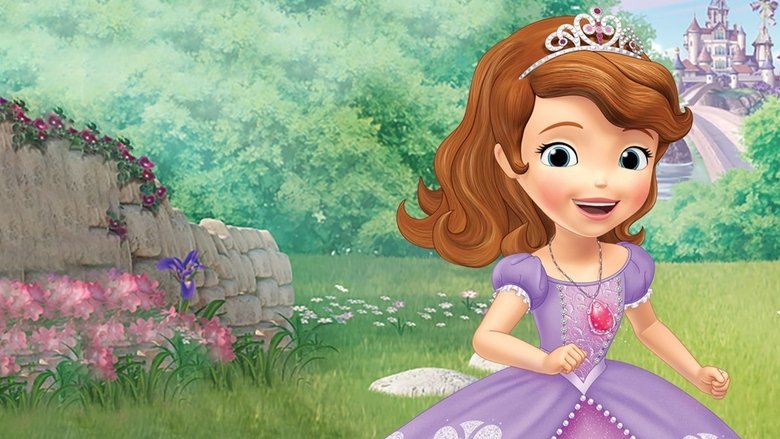
The Magic and princesses category holds 33 series, and the Magic and princesses help page sorts the royal from the magical. Sofia the First, which began in 2013, is the best known. Sofia is an ordinary village girl whose mother marries the king of Enchancia, and who must learn overnight how to be a princess, with a new stepbrother and stepsister, a school for royalty and an amulet that lets her talk to animals. The lesson of the series is that being royal is a matter of kindness and courage, and the famous princesses of older films visit to give advice. It ran for four seasons, and Sofia the First: Royal Magic, from 2026, takes her to a new school.
Mira, Royal Detective, from 2020, is set in a kingdom inspired by India, with its music, clothes, food and festivals; Mira is a commoner appointed detective to the queen, and she solves mysteries with two mongoose friends. Princess Power has four princesses from four fruit kingdoms who roll up their sleeves to help. Disney Junior Ariel shows the little mermaid as a child, Alice's Wonderland Bakery follows the great-granddaughter of the original Alice, and Little Princess, from Britain, is about a small girl with a crown and very firm opinions.
Magic of other kinds is found in Shimmer and Shine, about twin genies in training whose wishes tend to go slightly wrong; True and the Rainbow Kingdom, bright as a sweet shop; Mermaid Magic; Dew Drop Diaries, about tiny fairies who help families in the city; Wishenpoof!; Ben & Holly's Little Kingdom, a very funny series about a fairy princess and her elf friend; Care Bears: Unlock the Magic; The Bravest Knight; and Lost in Oz, a modern journey for older children through the land of the Wizard.
Gabby's Dollhouse
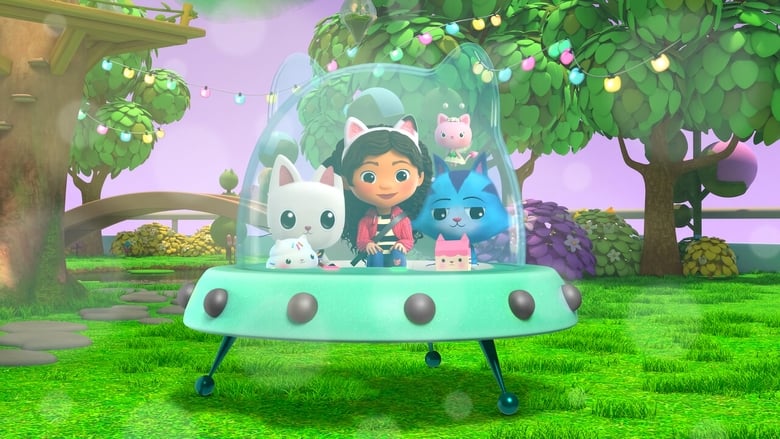
Gabby's Dollhouse, which began in 2021, has become one of the great successes of recent years, with fourteen seasons already. Gabby is a real girl, filmed in her bedroom, who opens a surprise box at the start of each episode, pinches the cat ears on her headband, and shrinks into her dollhouse, where the story continues in animation. Each room belongs to a different cat: a baking kitchen, a craft room, a music room, a garden, a bathtub ocean for a mermaid cat. With her friend Pandy Paws she bakes, makes, sings and solves a small problem.
What parents notice is the attitude. Gabby makes mistakes constantly and cheerfully; her motto is that she "failed fantastically", and she tries again. The series was created by two of the makers of the original Blue's Clues, and it shares that programme's habit of speaking directly to the child and waiting for an answer. Their newer version of it, Blue's Clues & You!, is in the catalogue as well.
Learning
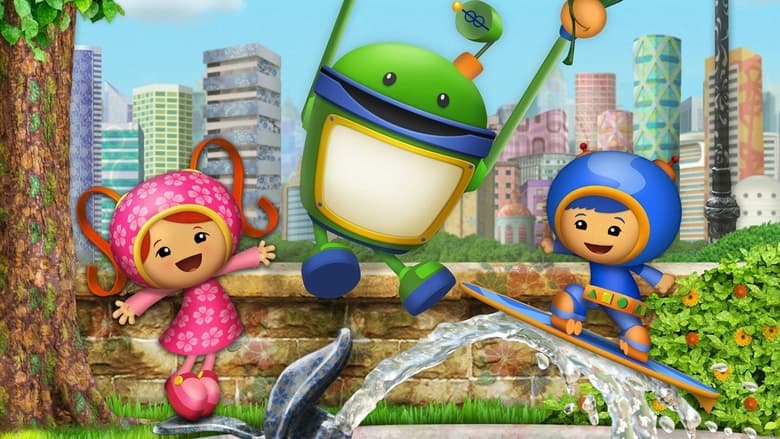
The Learning category holds 80 series, and the Learning help page groups them by subject. For numbers, Team Umizoomi, from 2010, sends two tiny heroes, Milli and Geo, and their robot friend through a city built of patterns, shapes and sums. Numberblocks, from Britain, is the clearest programme about arithmetic ever made for small children: each number is a character built of that many blocks, so that when Three hops on top of Two, the result is visibly Five. Peg + Cat has a girl and her cat who meet a "really big problem" in every story and solve it with counting, sorting and a song.
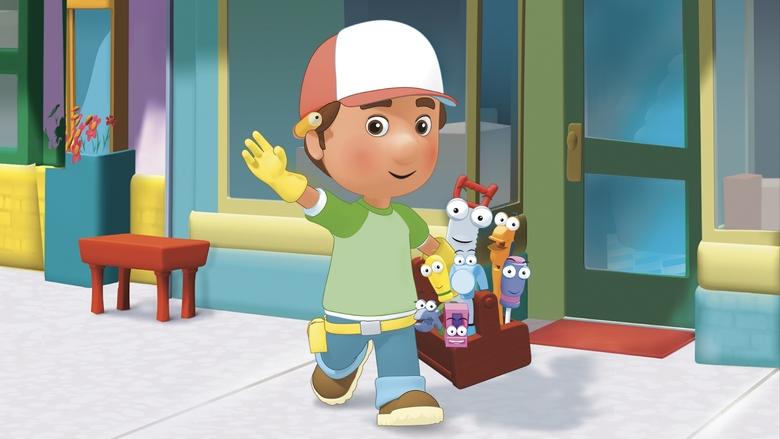
For words and reading, Super Why! turns four friends into heroes who fly into a storybook and change the tale by changing a word. WordWorld builds every object out of the letters that spell it, so that a dog is made of a D, an O and a G. Martha Speaks is about a dog who can talk after eating alphabet soup, and who uses rather long words. Word Party teaches first words to the very youngest through four baby animals. Ni Hao, Kai-Lan introduces a little Mandarin, and Handy Manny, about a cheerful repair man and his talking tools, a little Spanish.
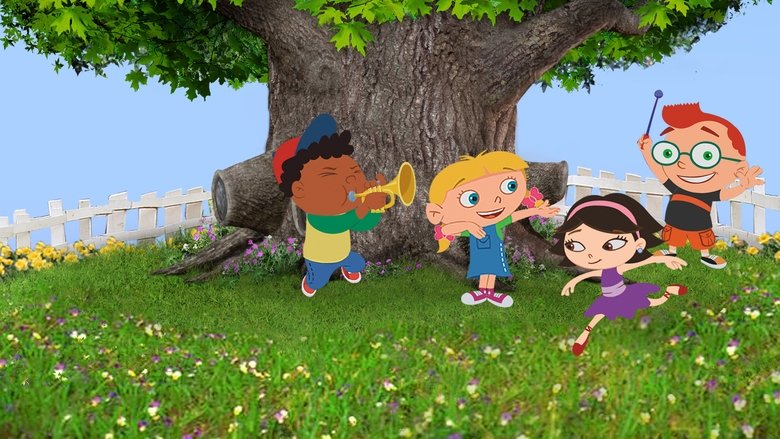
For science, Sid the Science Kid has a boy who begins every day with a question: why do bananas go brown, why do my shoes shrink? Ada Twist, Scientist follows an eight-year-old with a giant curiosity and two friends, an engineer and an architect. Ask the Storybots and StoryBots: Answer Time send five small creatures out to answer a real child's question, how do ears hear, where does rain come from, with songs that adults find themselves humming. The Magic School Bus Rides Again, The Cat in the Hat Knows a Lot About That!, Nature Cat and Little Einsteins, which builds each adventure round a famous painting and a piece of classical music, complete a strong shelf.
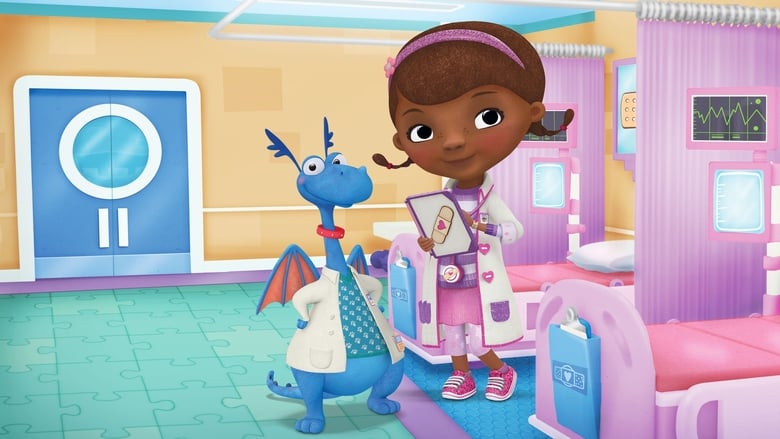
Learning about feelings is as important as learning to count. Daniel Tiger's Neighborhood, from 2012, grew out of one of the most respected children's programmes in American television. Daniel is a four-year-old tiger in a red sweater, and each story gives him a small trouble, sharing, waiting, being cross, a new baby, and a short song to remember what to do. Parents report that the songs work in real life, at the dentist and at bedtime. Doc McStuffins, about a girl of six who runs a clinic for her toys, has helped many children to feel calmer about visiting a doctor. Stillwater, in which a wise panda tells old stories to three children next door, Llama Llama and El Deafo, from a memoir about growing up with a hearing aid, are thoughtful in the same way.
Disney
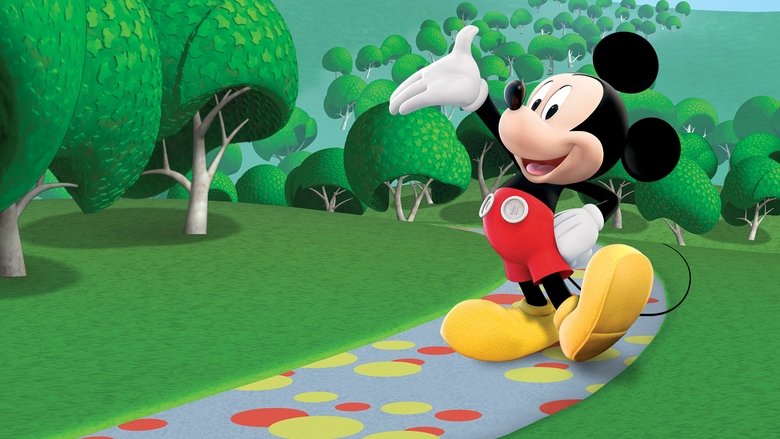
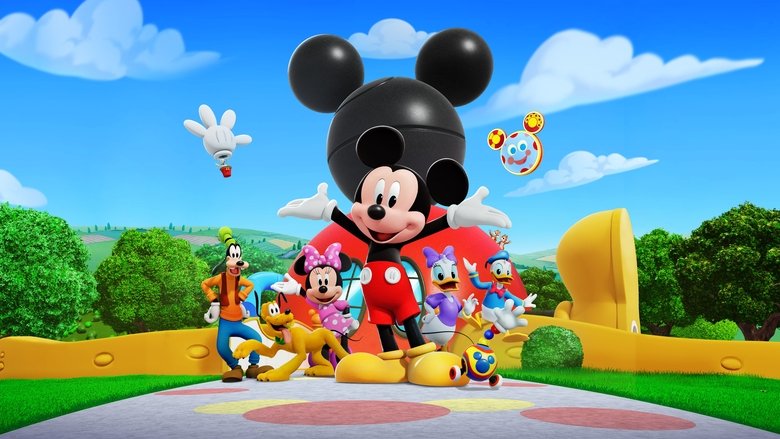
The Disney category holds 29 series, and the Disney help page begins with Mickey. Mickey Mouse Clubhouse, from 2006, was the first series to show Mickey, Minnie, Donald, Daisy, Goofy and Pluto in computer animation. Mickey invites the viewer into a clubhouse shaped like himself, a problem arises, and a flying helper called Toodles brings a set of tools from which the children choose. Every episode ends with the Hot Dog dance. The series has had four successors, all in the catalogue: Mickey and the Roadster Racers, Mickey Mouse: Mixed-Up Adventures, Mickey Mouse Funhouse and, in 2025, Mickey Mouse Clubhouse+. Minnie's Bow-Toons gives Minnie and Daisy a shop of their own.
Around Mickey stands a whole neighbourhood. Doc McStuffins has been described. Vampirina is about a friendly family of vampires who move from Transylvania to a suburban street and open a guest house, and about being the new child who is a little different. Fancy Nancy is a six-year-old who believes that everything is better with a French word and a feather boa. Sheriff Callie's Wild West has a cat sheriff who keeps the peace with a lasso and good manners. Henry Hugglemonster, Jungle Junction, Special Agent Oso, Eureka!, about a young inventor in the Stone Age, Kiya & the Kimoja Heroes, The Rocketeer and Me & Winnie the Pooh are others.
PJ Masks, from 2015, is the Disney series that slightly older children ask for. By day, Connor, Amaya and Greg are six-year-olds at school. At night they put on their pyjamas, press their bracelets and become Catboy, Owlette and Gekko, who protect the city from night-time mischief-makers of their own age. The stories are simple lessons in working together, the villains are naughty more than bad, and PJ Masks: Power Heroes continued the adventures in 2023.
Nickelodeon
The Nickelodeon category holds 20 series, and the Nickelodeon help page lists them. The studio has a particular way with preschool programmes: the characters look out of the screen, ask the child a question, and pause for the answer. Bubble Guppies, from 2011, is a good example, an underwater classroom of six fish-tailed children and their teacher, a large orange fish, with a pop song and a joke in every lesson. Team Umizoomi, Blaze and the Monster Machines, Shimmer and Shine, Wonder Pets!, Go, Diego, Go!, Dora and Friends: Into the City! and the new DORA, from 2024, are built the same way.
For older children the studio makes comedies. Big Nate, from the comic strip, is about a boy of eleven with boundless confidence and a record number of detentions. It's Pony is about a girl who lives in a city flat with an excitable pony. Middlemost Post follows a former rain cloud who delivers the mail, Bunsen is a Beast sends a small monster to an ordinary school, and Rusty Rivets is a young inventor who builds his way out of trouble.
From Britain and Ireland
Some of the best-made series in the catalogue come from Britain and Ireland, and the From Britain and Ireland help page gathers them. Hey Duggee, which began in 2014, may be the funniest programme ever made for under-fives. Duggee is a large brown dog who runs a club for five small animals called the Squirrels. In each seven-minute episode they earn a badge, for making jam, for being quiet, for sticks, and finish with a hug. The drawing is simple and bold, the jokes come at great speed, and parents enjoy it at least as much as their children; it has won a long list of awards.
Charlie and Lola, from 2005, is drawn like a collage of paper, fabric and photographs. Charlie is seven and endlessly patient; his sister Lola is four, "small and very funny", with firm views about supper, bedtime and nearly everything else. Sarah & Duck is a quiet, dreamlike series about a girl in a green hat and her best friend, a duck, in which the moon, a rainbow and a ball of wool may all turn up as characters.
From the Aardman studio, whose figures are shaped by hand in modelling clay and filmed one frame at a time, come Timmy Time, Shaun the Sheep: Adventures from Mossy Bottom and two sets of shorts, all told with sounds and gestures in place of words, so that children of any language can follow them. The Adventures of Paddington shows the bear from Peru as a cub, writing letters to his aunt. Peter Rabbit, Go Jetters, who tour the landmarks of the world, Tree Fu Tom, Twirlywoos, Numberjacks, Pip and Posy, Olivia and Angelina Ballerina: The Next Steps belong to the same tradition of calm, well-written television for the young.
Ninjago and adventure
The Adventure category is broad, with 123 series, because nearly every children's programme sends its heroes on a quest of some kind; the Adventure help page picks out those for older children. Ninjago: Masters of Spinjitzu is the chief of them, and it has the second-largest audience in the catalogue. In a land of islands and dragons, the wise Master Wu trains a team of young ninja, Kai, Jay, Cole, Zane and Lloyd, with Kai's sister Nya, each of whom commands an element: fire, lightning, earth, ice, energy and water. Everything on screen, people, temples, vehicles and villains, is built of toy bricks.
What began as a short series to accompany a range of toys grew, over sixteen seasons, into a long story with real feeling: the green ninja must face his own father, friends are lost and found, and the heroes grow up. It suits children from about seven, and many families watch it together from the beginning. LEGO City Adventures, a comedy about the police, fire crews and street sweepers of a busy city, and LEGO Friends are lighter programmes built of the same bricks.
Other adventures for the over-sixes include Lost in Oz; Wolfboy and the Everything Factory, about a dreamy boy who discovers the workshop at the centre of the earth where clouds, trees and rabbits are made; The Heroic Quest of the Valiant Prince Ivandoe, a comic journey of a young deer prince and his squire; Mighty Magiswords; Dragons Rescue Riders: Heroes of the Sky; Harriet the Spy, from the classic novel about a girl with a notebook; and City of Ghosts, a gentle and original series in which a club of children interview the friendly ghosts of Los Angeles and learn the history of its neighbourhoods.
Comedy
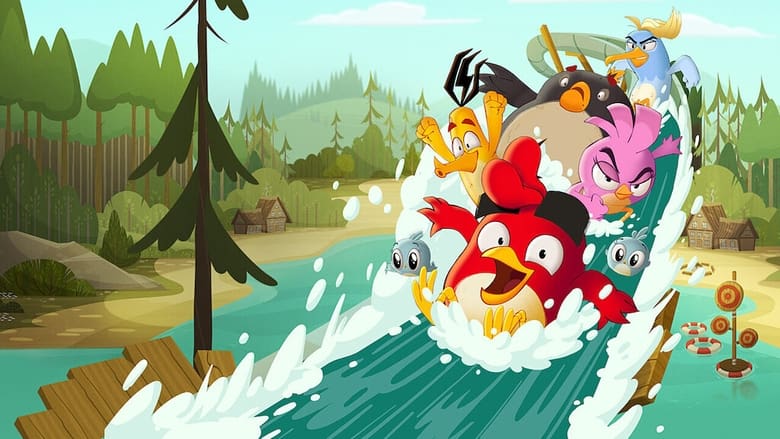
The Comedy category holds 73 series, and the Comedy help page names the funniest. Angry Birds: Summer Madness, from 2022, sends Red, Bomb, Chuck and Stella to summer camp as teenagers, under a counsellor called Mighty Eagle, with rival pigs across the lake; it is quick slapstick for children of seven and up. Scaredy Squirrel is a nervous squirrel who stacks shelves in a supermarket. Wayside is set in a school built thirty storeys high by mistake, with one classroom on each floor.
Ruby Gloom, from Canada, is about the happiest girl in a gently spooky mansion, with a cast of friendly oddities, and it has many admirers among older children. Pet Alien, Sidekick, set at a school for the assistants of superheroes, League of Super Evil, whose four villains are much too incompetent to trouble anyone, Grojband, about a garage band, Harvey Girls Forever!, Pinky Malinky, The Fungies!, The Epic Tales of Captain Underpants in Space, Woody Woodpecker and the wordless Oddbods (Shorts) and Larva Family round out the category. Peanuts by Schulz animates the famous comic strip in short pieces that keep the look of the original drawings.
Toys, dolls and old friends
Many children meet a character first as a toy or a book, and the catalogue holds the series that belong to them. Strawberry Shortcake's Berry Bitty Adventures, from 2010, in which a girl runs a café in a tiny town among the berry bushes, has the highest rating of any series with a large audience here, and Strawberry Shortcake: Berry in the Big City is its successor. The Care Bears appear in four series, from Care Bears: Adventures in Care-a-lot to Care Bears: Unlock the Magic. Barbie: A Touch of Magic, Barbie Dreamhouse Adventures: Go Team Roberts and Barbie Dreamtopia continue a famous name, and Polly Pocket, Lalaloopsy, Popples and Hello Kitty and Friends Supercute Adventures do the same for theirs.
Characters from books include Olivia, the determined piglet; Fancy Nancy; Pete the Cat; Llama Llama; Franklin and Friends; Babar and the Adventures of Badou, about the grandson of the elephant king; Angelina Ballerina: The Next Steps; Interrupting Chicken, about a little chicken who loves stories so much that she jumps into them; Pinecone & Pony; and Frog and Toad. Muppet Babies, from 2018, shows Kermit, Piggy, Fozzie and Gonzo as toddlers in a nursery where imagination turns the playroom into anything at all.
Quiet series for calm moments
Parents often ask for programmes that will settle a child instead of exciting one, for the half hour before a nap or after a long day. Several series in the catalogue were made with exactly that aim. Tumble Leaf, filmed with real miniature sets and puppets moved a frame at a time, follows a small blue fox named Fig, who finds an object in his "finding place" each morning and discovers through play what it can do. It has won many awards for its beauty. Shape Island, made in the same way, is about three friends called Square, Circle and Triangle.
Stillwater, Puffin Rock, Sarah & Duck, Trash Truck and Frog and Toad have been mentioned. To them may be added Chip and Potato, about a young pug starting school with a secret mouse in her pocket for comfort; Deepa & Anoop, about a girl and her colour-changing baby elephant at her family's guest house; Jessica's Big Little World; Kate & Mim-Mim; Justin Time; and Doozers. A good sign of a calm programme is a narrator: where a kindly voice tells the story, the pace is usually gentle.
Year by year
Three categories arrange the catalogue by date, and the Year by year help page describes them. 2005 to 2009 holds 35 series, the favourites of children who are now grown: Little Einsteins, Charlie and Lola, Go, Diego, Go!, Mickey Mouse Clubhouse, Handy Manny, Wonder Pets!, Wow! Wow! Wubbzy!, Super Why!, Dinosaur Train and Timmy Time.
The 2010s is the largest shelf, with 97 series, among them Octonauts, Team Umizoomi, Bubble Guppies, Doc McStuffins, Daniel Tiger's Neighborhood, Ninjago: Masters of Spinjitzu, PAW Patrol, Sofia the First, Hey Duggee, Blaze and the Monster Machines, PJ Masks and Vampirina. The 2020s holds 73, from Trash Truck, Mira, Royal Detective and Gabby's Dollhouse to Angry Birds: Summer Madness, SuperKitties, Rubble & Crew, DORA and the newest arrivals of 2025 and 2026, which the Latest toons group on the home page shows first.
The Top rated category gathers the 50 series rated 7.5 or more out of ten, and the small list beside the home page shows the first six.
How a cartoon is made
Children often ask how the pictures move, and the catalogue offers a tour of the methods. Most series today are made by computer in three dimensions: artists build each character as a digital model with a skeleton inside, animators pose it, and the computer fills in the movement and the light. PAW Patrol, Mickey Mouse Clubhouse, Octonauts and Gabby's Dollhouse are made this way. Others are drawn flat, as cartoons always were, though now on a tablet instead of paper: Hey Duggee, Daniel Tiger's Neighborhood, Big Nate in part, and Puffin Rock, whose backgrounds look like watercolour.
The oldest method of all is stop motion, in which real puppets on real miniature sets are moved a tiny step, photographed, and moved again, twelve or twenty-four times for every second of film. A team may finish only a few seconds in a day. Timmy Time, Shaun the Sheep: Adventures from Mossy Bottom, Tumble Leaf and Shape Island are made like this, and if you look closely you can see the weave of the cloth and the marks of fingers in the clay. Wonder Pets! used photographs of real animals, cut out and moved like puppets, and Charlie and Lola imitates scissors and glue. Pointing out these differences is a good game, and it leads many children to try a little animation of their own with a telephone camera and a few toys.
Songs worth knowing
Music is at the heart of programmes for the young, because a song is the easiest thing in the world to remember. The strategy songs of Daniel Tiger's Neighborhood are meant to be sung at home when the same trouble arises. Bubble Guppies writes a new pop song for every lesson, and Team Umizoomi, Blaze and the Monster Machines and Ask the Storybots have tunes that explain an idea in a minute. Little Einsteins goes further and uses the great composers: a child who has watched it may recognise a theme by Mozart or Beethoven years later.
Sofia the First and Vampirina have songs in the manner of stage musicals, Mira, Royal Detective draws on the sound of Indian film music, and the theme of PAW Patrol is known to every parent of a four-year-old, whether they wish it or otherwise. The official music services carry the soundtracks of most of these series, and a playlist for the car is an easy way of enjoying a favourite programme with the screen switched off.
Voices and languages
The voice behind a character is often a well-known actor, and older listeners enjoy recognising them. The narrator of Hey Duggee is a familiar British television presenter, the young bear of The Adventures of Paddington is spoken by the actor who plays him in the feature films, and the Cat in The Cat in the Hat Knows a Lot About That! is a celebrated comedian. Children's voices are usually recorded by real children, which is why the cast of a long series such as PAW Patrol changes every few seasons as the young actors grow up.
Because these programmes are sold all over the world, each is recorded again in dozens of languages, with local actors and newly translated songs. A family that speaks two languages at home can let a child watch one episode in each, and a child learning English at school will find the simple, clearly spoken dialogue of Peter Rabbit or Charlie and Lola a pleasant kind of practice.
Who makes these programmes
The names in small print at the end of a cartoon are worth knowing, because a studio's earlier work is a fair guide to its next. Disney Television Animation and Disney Junior made 29 of the series here, and the Nickelodeon studios 20. Brown Bag Films, in Dublin, animated a dozen, among them Doc McStuffins, Vampirina and Ada Twist, Scientist, all three created by the writer Chris Nee, whose programmes are known for warm families and heroines who think. DreamWorks Animation Television made eleven, including Gabby's Dollhouse and Go, Dog. Go!, from the picture book about dogs in cars.
Canada is a great centre of children's animation. Nelvana, of Toronto, made Franklin and Friends, Ruby Gloom and Scaredy Squirrel; 9 Story made Daniel Tiger's Neighborhood, Peg + Cat and Nature Cat; WildBrain, formerly DHX, made Strawberry Shortcake's Berry Bitty Adventures and Chip and Potato; and Spin Master, a toy company of Toronto, created PAW Patrol and Rusty Rivets. Silvergate Media, in London, made Octonauts and Peter Rabbit, Blue-Zoo made Numberblocks, and Studio AKA made Hey Duggee.
The streaming services have become patrons of unusual work. Series made for them tend to be shorter, eight or ten episodes a season, and more individual in style: Tumble Leaf, Lost in Oz, Stillwater, Frog and Toad, Shape Island, City of Ghosts, Trash Truck and El Deafo all began that way.
Finding a cartoon
The Finding titles help page explains the several ways to find a series on ToonHub4u. The search box in the dark menu bar accepts a title and shows matching series as you type; a child's own version of a name is often enough, since "paw" finds PAW Patrol and "duggee" finds Hey Duggee. The list of categories beside the home page gives the number of series in each, the A-Z page lists all 205 alphabetically with their years, and the Cartoons page lists them by popularity.
Some characters have several series, and the year tells them apart. Mickey Mouse has six, the Care Bears four, Barbie three, and Dora, the Wonder Pets, PJ Masks, Sofia, Strawberry Shortcake, Shaun the Sheep and My Little Pony two or more each. Typing the name of the character brings them all up together, so that a family can begin with the oldest and follow the story forward.
What a series page shows
The page for each series is laid out in one way throughout. The poster, the title, the year in which it began, the number of seasons and the average rating come first. A short account of the idea follows, with the genres, the makers and the voices, and then a list of the seasons with their episodes and a row of related series from the same categories. The Watch now button opens the list of official services that offer the series in the country you choose.
Children's programmes are spread across many official services. The large streaming services each hold the series of their own studios, the public broadcasters of several countries offer theirs free through their own applications, and many producers run official channels for children on the video services, with full episodes and compilations. Soundtracks in Hindi, Tamil, Telugu, Spanish, French and many other languages are common, and can be chosen in the player, which makes these series a pleasant way of hearing a second language. Availability changes from month to month, so the list on each page is the place to look.
The Add to My List button on each page saves a series for another day. The list sits in the browser of your own device, needing neither an account nor a password, and it opens from the My List link in the menu bar; a family can keep one list for each child by using separate devices. The My List help page shows how to remove a series and how to carry the list to another device.
Good viewing habits
A guide to cartoons should say a word about how much of them to watch. Doctors who study children's health generally advise very little screen time before the age of two, about an hour a day of good programmes between two and five, and a steady routine after that, with screens put away during meals and for the hour before sleep. Within those limits, what a child watches matters more than the exact number of minutes, and a slow, well-made story is worth more than an hour of restless clips.
A few habits help. Choose the series yourself, in advance, and let the child choose the episode. Say before you begin how many stories there will be, and stop at the end of a story, when the programme itself says goodbye; it is far easier than stopping in the middle. Sit down for at least one episode of anything new. Afterwards, ask what happened, who was kind, what the pups or the Octonauts did; telling the story back is excellent practice in language. And follow a programme into the real world when you can: bake after Gabby's Dollhouse, count the stairs after Numberblocks, look for beetles after Nature Cat.
Different ages can share a programme more often than one might think. A child of three and a child of seven will both watch Hey Duggee, Octonauts, Shaun the Sheep: Adventures from Mossy Bottom with pleasure, and a grandparent will enjoy Frog and Toad or The Adventures of Paddington as much as either.
A first week
Here are seven days of viewing for a household with a child of three to five, one or two short stories a day. On the first, Hey Duggee. On the second, PAW Patrol. On the third, Octonauts, and a look at a picture book about the sea. On the fourth, Daniel Tiger's Neighborhood. On the fifth, Gabby's Dollhouse. On the sixth, Numberblocks, and on the seventh, something calm: Puffin Rock or Trash Truck.
For a child of six to eight, a week might hold Ninjago: Masters of Spinjitzu, Ada Twist, Scientist, Angry Birds: Summer Madness, LEGO City Adventures, The Magic School Bus Rides Again, Big Nate and City of Ghosts. For a rainy afternoon with cousins of mixed ages, choose Timmy Time, Wacky Races or Oddbods (Shorts), which hardly need explaining; and for a sick day on the sofa, Sofia the First or Mickey Mouse Clubhouse from the beginning.
How the series were chosen
Every title on ToonHub4u was considered by a person before it was admitted. A cartoon is admitted only if it was made for children; animated comedies for adults, which are sometimes filed beside children's programmes by mistake, were removed one by one, together with action series meant for teenagers and programmes of religious instruction. The descriptions are short and plain, the years and the numbers of seasons are confirmed in the public television databases, and the posters and stills are the official ones.
ToonHub4u is a guide. It keeps neither episodes nor files to download; every Watch now button opens an official, licensed service, where the picture and sound are as their makers intended and where the settings for children can be relied on.
Questions and answers
Questions
What is ToonHub4u?
ToonHub4u is a guide to 205 animated series for children made since 2005. Each series has a page with its story, year, seasons and makers, and a Watch now button that leads to the official services carrying it in your country.
Which cartoon should we begin with?
For a child of three to five, begin with Hey Duggee, PAW Patrol or Octonauts. For a child of six to eight, try Ninjago or Ada Twist, Scientist. The guide gives a plan for a first week.
Is everything suitable for children?
Yes. Every series was screened by hand, and only programmes made for children are included.
Which series are best for very young children?
Daniel Tiger's Neighborhood, Puffin Rock, Tumble Leaf, Stillwater and Sarah and Duck are calm choices, and the help page For the very young lists more.
Are there series that teach numbers and reading?
Yes. The Learning category holds 80 series, among them Numberblocks, Team Umizoomi, Super Why! and WordWorld.
Are the cartoons available in Hindi and other languages?
Many official services offer several soundtracks, chosen in the player. The services listed on each page show what they provide.
How does My List work?
Press Add to My List on the page of any series. The list is kept by your own browser, free of charge, and the My List link in the menu bar opens it.
Does ToonHub4u host episodes or downloads?
ToonHub4u is a guide only. Every Watch now button leads to an official, licensed service.
